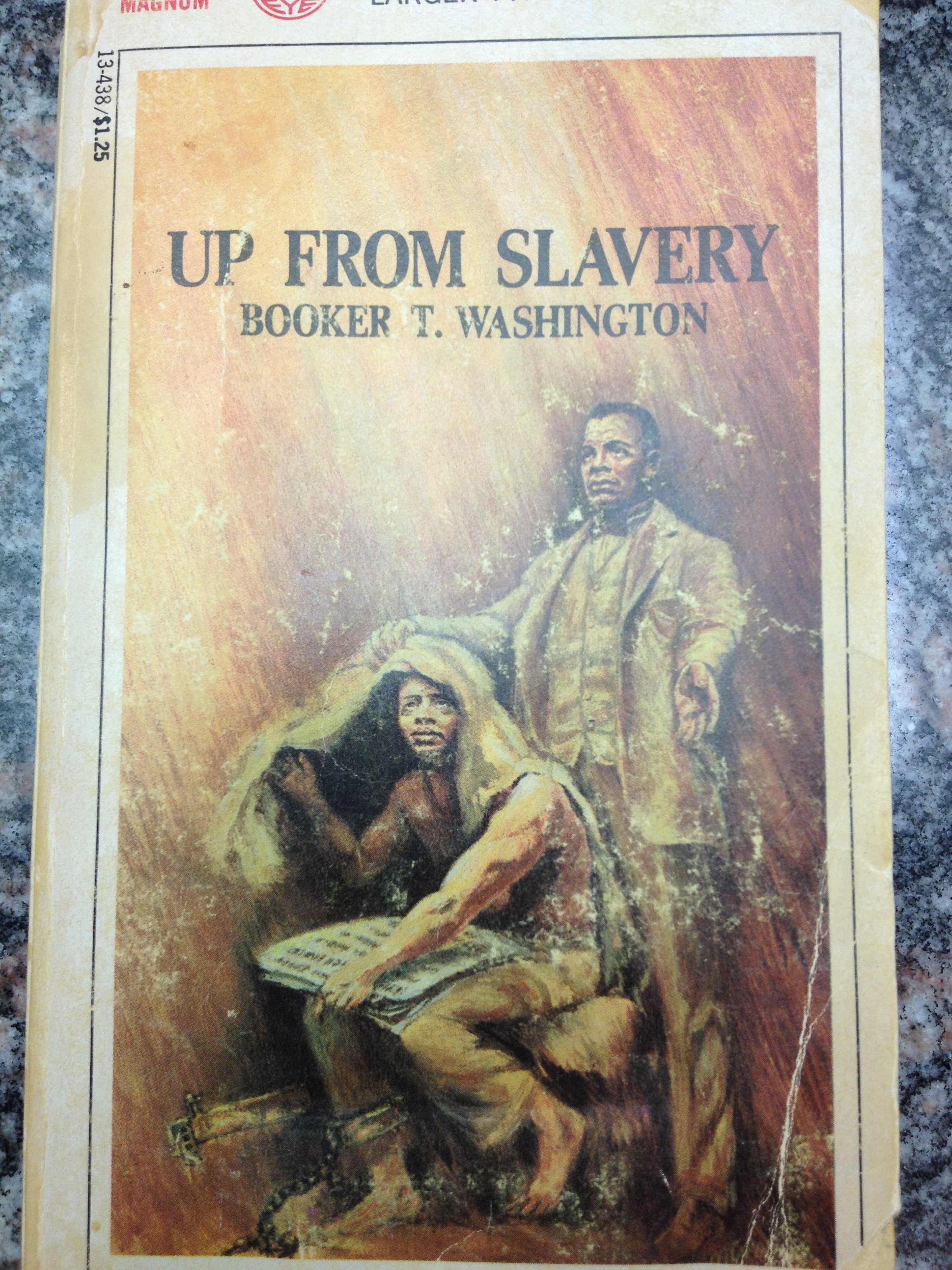
 Up From Slavery. Finished 1-13-16, rating 3.5.5, memoir, pub. serially 1900-01
Unabridged audio read by Andrew L Barnes. 7 hours, 30 minutes.
Booker T. Washington, the most recognized national leader, orator and educator, emerged from slavery in the deep south, to work for the betterment of African Americans in the post Reconstruction period.
“Up From Slavery” is an autobiography of Booker T. Washington’s life and work, which has been the source of inspiration for all Americans. Washington reveals his inner most thoughts as he transitions from ex-slave to teacher and founder of one of the most important schools for African Americans in the south, The Tuskegee Industrial Institute.
Booker T. Washington’s words are profound. Washington includes the address he gave at the Atlanta Cotton States and International Exposition in 1895, which made him a national figure. He imparts `gems of wisdom’ throughout the book, which are relevant to Americans who aspire to achieve great attainments in life. from Goodreads
I picked up this 1968 paperback with a very retro cover years ago and added it to my Classics Club reading list last year. I both read and listened to this one and was both inspired and somewhat bored by it. Let’s break it down a bit.
Washington was born a Virginia slave. His childhood as a slave wasn’t as awful as some I’ve seen portrayed in the movies, but impressive because he harbored no real resentment towards the whites. He was still a kid when Lincoln freed the slaves and life changed drastically for his family. They were now on their own and still together. Booker, from a young age, was determined to become educated. His desire and struggle for education was something, I think, that is inherent in all great men and women, and he was a role model. Through his dedication he was able to start teaching others. He somehow got himself to the Hampton Institute and enrolled even though he didn’t have enough money for tuition. It is a true testament to valuing hard work that he was able to accomplish what he did.
When the time came that he was chosen to head the Tuskegee Institute, Washington had to build it from the ground up. He became a spokesman for the college, and for African-Americans everywhere, by placing as much emphasis on labor as book learning. I loved his ‘pull yourself up by your bootstraps’ and black empowerment through education and hard work message. This part of the book, once he became more national speaker than day-to-day director of the school, dragged. And it was half the book, so you see the problem. It was a rehash of his speaking engagements and travel and some of the press clipping about these speaking engagements.
I thought his insights into the African-American experience during and after the Civil War were engaging and wish the book had been more about that. That being said, I am so glad I read it and wouldn’t hesitate to recommend it, especially now that I’ve taken your expectations down a notch 🙂

 Stacy's Books