Thich Nhat Hanh and I had the same birthday. Maybe that’s why his books connect with me so much. He was a buddhist monk from the age of 16 and involved himself in engaged Buddhism to speak out against social issues. For his efforts to help end the war in Vietnam, where he was born and then exiled, Martin Luther King Jr. nominated him for the Nobel Peace Prize. When he died in 2022 at the age of 91 he had published over 100 titles.
According to my count I’ve read 11 of his books. I’m not buddhist. I grew up Christian and still identify as such, but so much of what Thich (or Thay) talks about is universal and rings true to me. I don’t agree with everything he writes, but I appreciate my continued education and the expansion of my mind as new thoughts and ideas take root.
His books in the order I liked them. If you are new to Thich Nhat Hanh or buddhism there’s no better place to start than at the top.
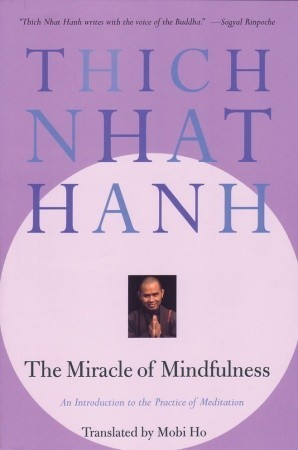
The Miracle of Mindfulness, 150 pages, 1999
This is when mindfulness went mainstream in the US and this book was the introduction for many of us. I haven’t read it in years, so I don’t know how much of an impact it might have now that mindfulness is a common recommendation. BUT, if you want to really slow down and look at things in a new way this is the book for you.
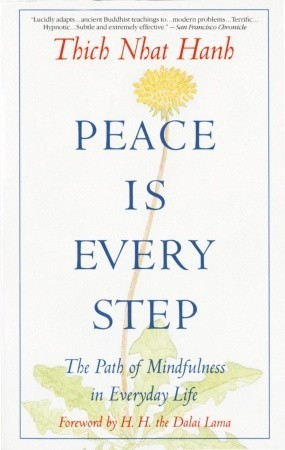
Peace is Every Step, 134 pages, 1992
This one talked a lot about anger and resentment that resonated with me.
“When you begin to see that your enemy is suffering, that is the beginning of insight. When you see in yourself the wish that the other person stop suffering, that is a sign of real love.”
“Every thought you produce, anything you say, any action you do, it bears your signature.”
“The roots of war are in the way we live our daily lives —the way we develop our industries, build up our society, and consume goods.”
Good Citizens, 144 pages, 2012
This was one of my favorite books of the year when I read it in 2021.
“The suffering and the quarreling in a family don’t begin with unkindness, they begin with one person’s pain and stress.”
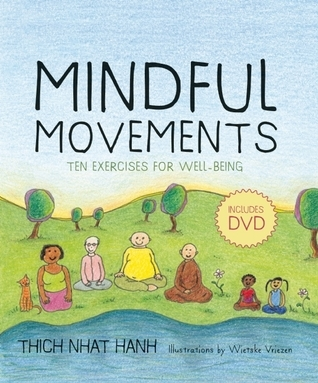
Mindful Movements, 62 pages, 1998
Gage and I used this for homeschooling. Information about mindfulness, a picture book portion for kids to better explain, the ten movements themselves, and then a bio on Thich Nhat Hanh. We did the movements at the beginning of our school day for a month and still do them from time to time. The DVD was fantastic, even having Thich Nhat Hanh himself showing the movements.
No Death, No Fear, 208 pages, 2002
This book, No Death, No Fear: Comforting Wisdom for Life, focuses on how to look at death and even how to ease the passing of those you love. This was a part of my morning reading for a few months. Powerful and thoughtful.
“We think of our body as our self or belonging to our self. We think of our body as me or mine. But if you look deeply, you see that your body is also the body of your ancestors, of your parents, of your children, and of their children.”
“If you live without awareness it is the same as being dead.”
Living Buddha, Living Christ, 240 pages, 1997
This one was the more difficult of his books I’ve read. I learned about the specifics of Buddhism in this one and I’m confused on some points. Hanh studied Christianity and Jesus’s life and he equates much in the two religions. Some of these points I saw to be true and some I thought were a stretch, but I find it rare that people experience Jesus in the same way even as Christians so I can’t fault him in his thoughtful insights.
If you are familiar with Thich Nhat Hanh then I think you will like it. His chapter on the peaceful heart made my own jump around in happiness! If you would like a beginner’s course on Buddhism then I think you will learn something here. I also think Christians will recognize the truth in much of what he says although I might start with one of his other books on mindfulness first.
True Love, 128 pages, 2004
What is it about Thich Nhat Hanh that speaks to me? So many things. I love his ability to embrace other religions. I love that I can immediately take his words and use them. I love the way he calms my spirit and provides insight. See? He’s my guy.
This particular book was about the four elements of true love in Buddhism. The first is maitri (love-kindness or benevolence). The second is karuna (compassion). The third is mudita (joy) and the fourth is upeksha (equanimity or freedom). It’s a focus on learning on how to love well and I’m already using his wisdom.
I think everyone has different authors or spiritual guides that speak to their heart. I know my love for him won’t be for everyone and that’s okay. He’s written a lot of books, many, like this one, aren’t long so you can give him a try without investing too much time. He may speak to you too.
How to Relax, 120 pages, 2015
How can you not like a guy who says that lazy days are important? And there is a tiny section on using snoring as a way to bring you in the here and now and sleep easily. I made sure to read this page to Jason since he has to put up with my snoring.
I am a worrier. I come by it honestly, a family tradition, but it is not conducive to living life fully. By focusing on my breath or even adding a few short meditations, I can come back into the present easily. This is important since worry is all about the unknown future and happiness can be found in the present moment. It takes practice and that’s why I love the format and length of this book. I can easily pick this up and turn to the pages I’ve marked for a peaceful moment.
How to Eat, 128 pages, 2004
This is a slight 125 page book on not only how to eat, but how to do so with the meaning. Mindfulness is about being present in all that you do, so by bringing that to your food, you can change your life for the better. This is not a diet book, but he does touch upon that we should only be putting the healthiest of foods in our body and that we should not be eating our worries, fear, or anger. I’ll leave you with a few quotes.
“Enjoy your meal. Stop thinking and be here fully, body and mind.” page 32
“With each meal, we make choices that help or harm the planet.” page 59
Peace is Every Breath, 160 pages, 2011
“We have negative mental habits that come up over and over again. One of the most significant negative habits we should be aware of is that of constantly allowing our mind to run off into the future. Perhaps we got this from our parents. Carried away by our worries, we’re unable to live fully and happily in the present. Deep down, we believe we can’t really be happy just yet—that we still have a few more boxes to be checked off before we can really enjoy life. We speculate, dream, strategize, and plan for these “conditions of happiness” we want to have in the future; and we continually chase after that future, even while we sleep. We may have fears about the future because we don’t know how it’s going to turn out, and these worries and anxieties keep us from enjoying being here now.”
How to Connect, 129 pages, 2020
“When we feel overwhelmed, confused, or unable to think clearly, we don’t perceive things as they are, and our words and actions can create suffering and separation for ourselves and others.”
I’ll add more titles as I read them.
My other favorite authors here.

 Stacy's Books